
As usual, I have chosen a sentence from today’s Book of the Day, so as to make a deeper analysis.
The rift in the metabolism between human beings and the earth that Marx described has widened into a global ecological rift under capitalism.
What appears initially as a compact theoretical claim unfolds into an extraordinarily rich conceptual structure once its key terms are examined carefully, because each component of the sentence condenses decades of intellectual debate spanning political economy, ecology, philosophy of nature, and the sociology of industrial civilization. The sentence functions almost like a conceptual compression device, distilling into a single line the central argument of ecological Marxism: that modern environmental crises are not accidental byproducts of economic activity but expressions of a structural contradiction embedded within capitalism’s organization of the relationship between human societies and the natural world.
The starting point of the sentence is the term metabolism, a concept that enters social theory through the work of Karl Marx, who used the German word Stoffwechsel to describe the material interchange between humanity and nature. Marx borrowed the concept from nineteenth century agricultural chemistry, particularly the work of scientists studying soil fertility and nutrient cycles, and transformed it into a philosophical category within historical materialism. Labor, in Marx’s analysis, represents the process through which human beings mediate their relationship with the earth by transforming natural materials into the means necessary for life. Through labor, humanity participates in a continuous exchange of matter and energy with the natural world, an exchange that sustains both human societies and ecological systems.
Under pre-capitalist conditions this metabolic exchange, though often exploitative and unequal, remained relatively embedded within local ecological cycles. Agricultural production depended on maintaining soil fertility through organic fertilizers and crop rotation, while communities remained geographically connected to the ecosystems supporting their subsistence. The scale of production imposed natural limits that constrained the intensity of resource extraction. The metabolic relationship between society and nature therefore maintained a degree of equilibrium, not because human societies consciously pursued ecological harmony but because the technological and economic structures available to them limited the extent of environmental disruption.
The emergence of capitalism transforms this metabolic relationship in a profound way. Once production becomes organized primarily around the accumulation of capital rather than the satisfaction of immediate human needs, the exchange between humanity and nature begins to operate according to a radically different logic. Capitalist production must continuously expand in order to remain profitable, generating an imperative of growth that accelerates the extraction of resources and the generation of waste. The metabolic exchange between society and nature is therefore reorganized around the pursuit of surplus value rather than around the regenerative rhythms of ecological systems.
The word rift in the sentence captures the structural consequences of this transformation. A rift is not merely a tension or imbalance but a rupture within a previously functioning system. Marx originally used the concept to describe the disruption of nutrient cycles caused by industrial agriculture in nineteenth century Europe, where food produced in rural areas was transported to urban centers without the return of organic waste to agricultural soils. This process depleted the fertility of farmland while simultaneously generating sanitation crises in rapidly expanding cities. The metabolic exchange between society and nature became spatially fragmented, creating a gap between production and ecological regeneration.
Foster, Clark, and York extend this insight beyond the agricultural context into the broader dynamics of industrial civilization. The sentence emphasizes that the metabolic rift described by Marx has widened into a global ecological rift, indicating that the structural contradiction originally observed within local agricultural systems has expanded to encompass the entire planetary biosphere. Industrial capitalism has amplified the scale and intensity of metabolic disruption to a degree unimaginable in Marx’s time.
One of the most striking dimensions of this expansion lies in the transformation of energy systems. The widespread adoption of fossil fuels during the industrial revolution introduced an enormous influx of stored solar energy accumulated over hundreds of millions of years. This energy allowed human societies to dramatically increase the speed and scale of production, enabling industrial processes that could extract, transform, and transport resources at unprecedented rates. While fossil fuels provided the energetic foundation for modern economic growth, they also introduced a new form of metabolic imbalance by releasing vast quantities of carbon dioxide into the atmosphere.
The accumulation of greenhouse gases illustrates how the metabolic rift has become planetary in scope. The atmosphere functions as part of a complex climate system regulating the distribution of heat and moisture across the earth’s surface. Industrial emissions alter the chemical composition of this system, intensifying the greenhouse effect and destabilizing climatic patterns that have remained relatively stable throughout the Holocene epoch. Climate change therefore represents one manifestation of the global ecological rift described in the sentence.
Another dimension of this rift emerges in the rapid loss of biodiversity. Ecosystems operate through intricate networks of interactions among species, where each organism plays a role in maintaining the stability and resilience of the whole system. Capitalist expansion often transforms diverse ecosystems into simplified landscapes dedicated to monoculture agriculture, industrial forestry, or resource extraction. This simplification undermines ecological resilience by eliminating species that perform crucial ecological functions such as pollination, nutrient cycling, and pest regulation. The disappearance of these functions can trigger cascading effects that destabilize entire ecosystems.
The sentence also invites analysis from the perspective of systems theory, because the global ecological rift represents a disruption of feedback mechanisms that regulate planetary processes. The Earth system maintains stability through complex interactions among atmosphere, oceans, biosphere, and geological structures. When industrial activity exceeds certain thresholds, these feedback mechanisms can shift abruptly, pushing the system into new states that may be less hospitable to human civilization. Scientists studying planetary boundaries warn that several of these thresholds—such as climate stability, biodiversity integrity, and nitrogen cycles—are already being approached or exceeded.
Within this context the global ecological rift becomes a concept describing the growing divergence between the dynamics of capitalist accumulation and the regulatory mechanisms of the Earth system. Capitalism treats nature primarily as a reservoir of resources and a sink for waste, yet the planet functions as an integrated system with limits that cannot be transcended indefinitely. The rift therefore widens as industrial civilization expands its metabolic throughput beyond the capacity of ecosystems to regenerate.
The sentence also carries significant implications for political philosophy. If ecological crises arise from the structural organization of production rather than from isolated technological failures, then addressing these crises requires more than technical adjustments. It requires a transformation of the institutional frameworks governing economic activity. Foster, Clark, and York suggest that the restoration of a sustainable metabolism between humanity and nature would require a society in which production is organized democratically around ecological and social needs rather than around the pursuit of profit.
Such a transformation raises profound questions about the future of industrial civilization. Can economic systems based on perpetual growth be reconciled with the finite limits of the biosphere? Can technological innovation compensate for the environmental pressures generated by expanding production? Or does the ecological rift represent a fundamental contradiction that will continue to intensify unless the underlying logic of accumulation is replaced by alternative forms of social organization?
The sentence therefore operates as both a diagnosis and an invitation to further inquiry. By tracing the expansion of the metabolic rift from the agricultural disruptions observed by Marx to the planetary ecological crises of the present, it opens a vast conceptual landscape in which political economy, ecological science, and philosophy converge, encouraging deeper exploration into how societies might reconstruct their relationship with the Earth in ways that restore the metabolic balance upon which the continuity of both human civilization and the broader community of life ultimately depends, a line of reflection that inevitably unfolds into further considerations about planetary governance, post-capitalist economic models, the ethics of technological power, and the intricate systemic intelligence embedded within the living fabric of the biosphere whose complexity continues to challenge the simplifying abstractions through which industrial civilization has attempted to organize its place within the world.
Beyond the historical materialist and ecological interpretations already explored, the sentence invites additional analytical perspectives that illuminate dimensions of the concept which remain less visible when viewed exclusively through the traditional framework of Marxian political economy. The idea of a global ecological rift functions almost like a conceptual portal through which multiple intellectual traditions can converge, each revealing different aspects of the same structural fracture between industrial civilization and the planetary systems sustaining it.
One particularly illuminating perspective emerges from the domain of geological temporality, the field concerned with the deep timescales through which planetary processes unfold. Geological systems evolve across millions of years through processes such as sedimentation, tectonic activity, mineral formation, and atmospheric transformation. Human economic systems, by contrast, operate according to extremely compressed temporal rhythms measured in quarters, fiscal years, and investment cycles. Capital accumulation demands constant acceleration of production and circulation, generating a temporal regime in which economic decisions priorities immediate profitability over long term ecological stability. The sentence therefore hints at a profound temporal disjunction: the metabolic rift expands because capitalist time operates at a velocity fundamentally incompatible with the regenerative timescales of ecosystems and geological processes. Fossil fuels represent an especially striking illustration of this contradiction, since industrial civilization releases into the atmosphere carbon deposits formed during ancient geological epochs within a time frame measured in mere centuries.
Another perspective appears when the sentence is examined through the lens of urban metabolism, a concept used by urban ecologists to describe cities as systems that absorb enormous quantities of energy, water, food, and materials while producing equally vast flows of waste. Modern metropolitan regions function as highly concentrated metabolic nodes within the global economy, importing resources from distant territories and exporting pollution across planetary systems. The ecological rift described in the sentence becomes visible in the spatial organization of these flows: agricultural lands in one continent feed cities in another, minerals extracted from remote mountains become components of electronic devices circulating through global supply chains, and atmospheric emissions generated by industrial activity accumulate within planetary climate systems affecting regions far removed from the original sources of pollution. The city, in this perspective, becomes a magnifying lens revealing how capitalism reorganizes the metabolism between humanity and nature through vast logistical networks that obscure the ecological origins and consequences of economic activity.
A further layer emerges from anthropological perspectives on cosmology, particularly when one compares capitalist societies with Indigenous traditions that conceptualize the relationship between humans and the natural world in radically different terms. Many Indigenous cosmologies describe humans as participants within a living network of reciprocal relationships with animals, plants, rivers, and landscapes. These traditions often encode ecological knowledge through narratives, rituals, and ethical frameworks emphasizing balance and restraint. When viewed from this standpoint, the global ecological rift represents not merely a material disruption but also a cosmological transformation: capitalism replaces relational ontologies with an instrumental worldview in which nature becomes an external object available for extraction. The sentence therefore hints at a civilizational shift in which entire epistemologies governing human interaction with the earth have been displaced by the abstractions of market logic.
An additional interpretive dimension arises from psychoanalytic theory, which offers a way of understanding how societies collectively perceive or fail to perceive ecological crises. Industrial civilization produces enormous quantities of scientific data documenting environmental degradation, yet political and economic systems often respond to these signals with remarkable inertia. Psychoanalytic thinkers have suggested that societies may employ forms of collective denial when confronted with existential threats that challenge their foundational institutions. Within this framework the ecological rift could be interpreted as a form of structural disavowal embedded within the ideological apparatus of capitalism: the economic system continues to pursue growth even as its ecological consequences become increasingly evident, because acknowledging the full implications of those consequences would require questioning the legitimacy of the system itself.
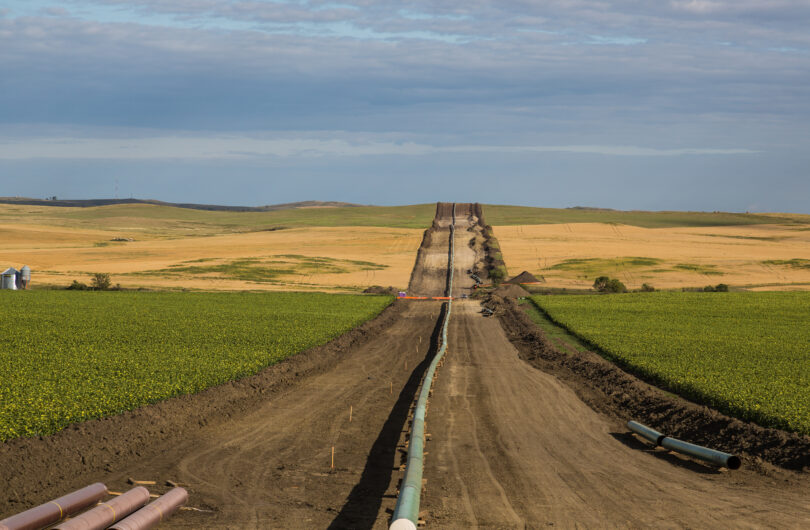
Another illuminating angle emerges from the philosophy of technological infrastructure. Modern industrial systems depend on vast material networks including pipelines, shipping routes, electrical grids, mining operations, and digital communication platforms. These infrastructures reorganize the spatial and energetic metabolism of civilization, enabling the rapid circulation of commodities across planetary distances. The ecological rift described in the sentence is therefore partially embedded within these infrastructures themselves, which channel flows of energy and materials according to the imperatives of capital accumulation rather than according to ecological limits. Once such infrastructures are constructed they acquire a form of structural inertia, locking societies into patterns of resource consumption that become increasingly difficult to alter. Fossil fuel pipelines, highway networks, and industrial agriculture systems illustrate how technological infrastructures can stabilize ecological disruption within the material architecture of civilization.
A perspective drawn from evolutionary biology offers yet another intriguing interpretation. Biological evolution operates through processes of adaptation in which species survive by maintaining dynamic equilibrium with their environments. When organisms overexploit their ecological niches they often trigger feedback mechanisms that constrain their populations. Human societies, however, possess cultural and technological capacities that allow them to temporarily bypass such feedback mechanisms by accessing new energy sources and expanding into new territories. Capitalism amplifies this process by transforming technological innovation into a competitive imperative, continually expanding the metabolic reach of industrial civilization. From an evolutionary standpoint the ecological rift may therefore represent an unprecedented experiment in which a technologically empowered species temporarily escapes the ecological constraints governing most forms of life, raising questions about whether such a trajectory can remain stable over long periods of planetary history.
A further dimension appears when the sentence is analyzed through information theory and cybernetics, fields concerned with how systems process signals and regulate themselves through feedback loops. Ecological systems maintain stability through complex networks of feedback interactions involving temperature, nutrient cycles, and species populations. Capitalist economies, however, regulate production primarily through price signals transmitted through markets. The ecological rift emerges when these two regulatory systems diverge. Market prices respond quickly to shifts in supply and demand but often fail to incorporate long term ecological consequences. Environmental degradation therefore remains partially invisible within the informational architecture of the economy. The rift between human metabolism and the earth becomes not only a material rupture but also an informational one: the signals guiding economic behavior fail to represent the full complexity of ecological processes.
Another fascinating angle arises from energy anthropology, which examines how different forms of energy shape social organization. Pre industrial societies relied primarily on renewable energy flows such as sunlight, wind, water, and biomass. These energy sources imposed natural constraints on economic activity because their availability fluctuated according to environmental conditions. Fossil fuels radically transformed this dynamic by providing dense, transportable energy capable of sustaining large scale industrial production independent of local ecological limits. The global ecological rift described in the sentence can therefore be interpreted as the consequence of an energy transition that temporarily liberated industrial civilization from the constraints that once bound human societies to local ecosystems. Yet this liberation remains fragile, because the continued use of fossil fuels simultaneously destabilizes the climate systems regulating the planet’s habitability.
The sentence can also be approached through the perspective of civilizational theory, which examines the long-term trajectories of complex societies. Many historical civilizations experienced periods of expansion followed by ecological or economic crises when their resource base became exhausted. The ecological rift described by Foster, Clark, and York suggests that industrial civilization may be encountering a similar structural tension, although on a planetary scale unprecedented in human history. The difference lies in the global integration of modern economic systems, which means that ecological disruptions occurring in one region can propagate through supply chains, financial markets, and climatic systems affecting societies across the entire planet.
Viewed through these diverse lenses, the sentence becomes far more than a theoretical observation about capitalism and ecology. It transforms into a conceptual nexus connecting geology, anthropology, psychology, cybernetics, infrastructure studies, and evolutionary theory, each perspective revealing additional dimensions of the widening rupture between the metabolic processes sustaining human civilization and the complex planetary systems within which that civilization unfolds, a rupture whose implications continue to unfold across scientific inquiry, philosophical reflection, and political struggle as humanity confronts the unprecedented challenge of reimagining its place within the intricate web of life that has always sustained it.