
-
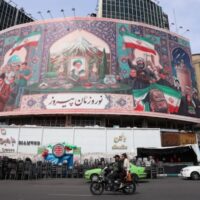
Iran demands U.S.-Israeli war’s end under 5 conditions
Iran on Wednesday asserted that any cessation of hostilities will occur strictly on Tehran’s terms and timeline, refusing President Trump’s attempts to dictate the war’s resolution, amid the U.S.-Israeli agressions.
-
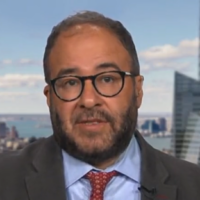
This is the only post-9/11 case seeking accountability for torture to reach a jury
CounterSpin interview with Baher Azmy on Abu Ghraib justice.
-

China’s great pivot: From scale to substance
The era of growth at any cost has officially yielded to a model defined by three pillars: domestic demand, technological self-reliance, and a radical green transition.
-

Why doesn’t Iran trust the U.S.?
The latest bilateral talks ended in joint U.S.-Israeli strikes on Feb. 28 that ignited the war.
-
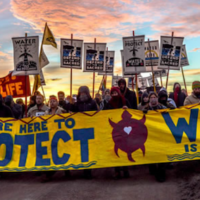
Big Green + Big Tech = Bigger Environmental Racism: How certain white-led “environmental” groups are selling out frontline communities to accommodate data centers
As David Holt, Mayor of Oklahoma City, remarked to Politico last month, “If you had asked me about data centers five months ago, I would have said: ‘What’s a data center?”
-

Spain’s migrant regularization marks a rare progressive turn in Europe
As the continent hardens its borders, Madrid bets on inclusion over exclusion.
-

The London Ambulances Attack: Of course it was a false flag
To believe this is a false flag, it is not in any way necessary to believe that the ambulance organisation itself was complicit.
-
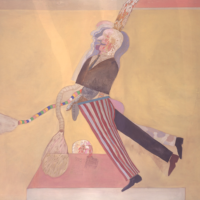
Cuba is not afraid: The Twelfth Newsletter (2026)
Faced with an illegal oil blockade, the Cuban government has expressed openness to talks with the Trump administration but will not abandon its principles of sovereignty and dignity.
-
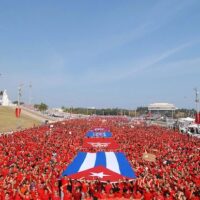
‘Few nations in the world have faced a war on all fronts as Cuba has’
An interview with Ana Hurtado by Oriol Sabata.
-

Audrey Watters: Who benefits from AI? Not you.
I invite you to open the link and continue reading this thought-provoking article.
-
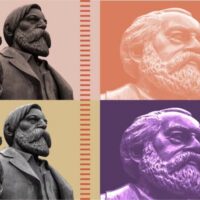
Can dialectics explain the world?
Dialectical materialism is best seen as a valuable heuristic—a practical approach to problem solving, analysis and investigation, explains the MARX MEMORIAL LIBRARY
-
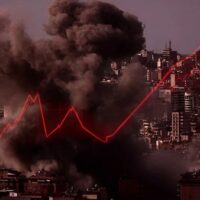
Global corporations control the infrastructure in modern warfare
Examining how private capital and global corporations now dictate the logistics of U.S.-Israel war against Iran.
-
U.S. sanctions on Venezuela continue: Corporate beneficiaries and a targeted society
In the wake of Washington’s January 3 military attack and then problematic détente with Caracas, corporate media suggest a meaningful shift in Venezuela policy, implying relief for a country long subjected to economic coercion.
-

How microplastics threaten marine ecosystems and the food chain
Microplastics are pervasive pollutants that accumulate in marine ecosystems and enter the human food chain.
-
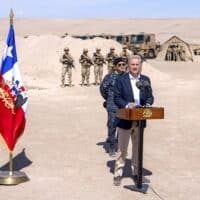
Kast begins construction of a controversial border wall
During his first week as president of Chile, the ultra-conservative leader has also ordered tax cuts and launched talks with the United States to explore the mining of rare earth metals.
-
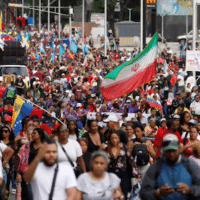
What is the ‘Left’ in the Era of Global Fascism
There is no coherent and sustained leftist movement at the very moment that U.S. led global fascism is accelerating.
-

Chaos as U.S. power
Michael Hudson: “Well, I’d originally planned when you suggested talking about US foreign policy. I was going to go through my usual approach, which we’ve discussed, starting in the Bronze Age for, debt and debt financial policy and say, well, here’s how American foreign policy has evolved.”
-

‘Cuba is not alone’: Inspiring days of solidarity in Havana
In a world marked by polarization and power asymmetries, such initiatives remind us that collective action rooted in justice can challenge dominant narratives and support nations defending their right to self-determination.
-

Anti-Zionism is not Anti-Semitism
The Collective West, which unconditionally supports the war of destruction against Iran, claims that anyone who raises their voice against the Zionists and Israel is an anti-Semite who must be punished.
-
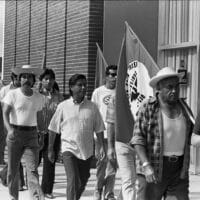
The Rise and Fall of the United Farm Workers
Chavez could not abide the idea, much less the reality, that the farm workers themselves could and should run the union.