
-
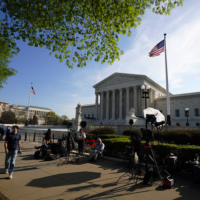
Birthright case forces U.S. Supreme Court to confront prospect of Americans losing citizenship
As the U.S. Supreme Court heard arguments last week about the constitutionality of President Donald Trump’s executive order to end birthright citizenship, Justice Sonia Sotomayor seemed skeptical. The order as written applies only to babies born in the future, and the Trump administration has asked the court to exclude current citizens from any decision. Still, […]
-
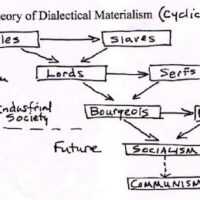
More than meets the eye: The material dialectic of vision
Charles Darwin said that thinking about the vertebrate eye made him “shudder.”
-
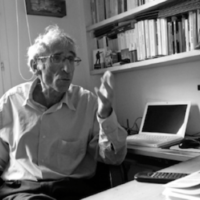
Daniel Bensaïd (2005): Dialectics and Revolution
Dialectical reason is, when set against the dominant mode of reason, unreason: only in encompassing and cancelling this mode does it become itself reasonable.
– Theodor W. Adorno, Minima moralia
1. i About 30 years ago, Michael Löwy published an article entitled ‘From Hegel’s “Logic” to the Finland Station in Petrograd’.ii In it, he highlighted the connection between Lenin’s feverish rereading of Hegel’s great text in the midst of global turmoil and his evolution, under the heat of the moment, from the ‘April Theses’ to the urgent calls, on the eve of October, to seize the moment. Stahis Kouvelakis took up and expands on this theme in a fine article to be published.iii Conversely, the farewell to revolution and the liquidation of dialectics go hand in hand. In his little book on Lenin, written in a time of revolutionary effervescence, Lukacs was very much correct to underline that ‘in practice’,
the revisionist is always essentially a figure of compromise: necessarily so, because of this theoretical starting-point. Revisionism is always eclectic. Even at a theoretical level it tries to blur and blunt class differences, and to make a unity of classes – an upside-down unity which only exists in its own head – the criterion for judging events. The Revisionist thus in the second place condemns the dialectic. For the dialectic is no more than the conceptual expression of the fact that the development of society is in reality contradictory, and that these contradictions (class contradictions, the antagonistic character of their economic existence, etc.) are the basis and kernel of all events’ […] Because the dialectic as a method is only the theoretical formulation of the fact that society develops by a process of contradictions, in a state of transformation from one contradiction to another, in other words in a revolutionary fashion, theoretical rejection of it necessarily means an essential break with the whole revolutionary standpoint.’ iv
The materialist dialectic, Lukacs goes on to say, is a ‘revolutionary dialectic’ that opposes the determinism of classical physics, mechanical causality, unilateral abstraction, the linear and empty temporal continuum (targeted by Benjamin in his Theses) and quiet evolution without leaps or breaks. On the contrary, it implies a rhythmic conception (a ‘rhythmology’, in Lefebvre’s neologism) of social and political temporality, with its threshold effects and leaps, its crises, wars and revolutions. It is therefore opposed to the ‘socialism outside of time’ of the Second International, as described by Angelo Tasca in his book on the rise of fascism, to the ‘tortoise-paced socialism’ of the passive accumulation of forces so dear to Kautsky, or to the aimless movement beloved by Bernstein. On the contrary, we must be able to seize the precious ‘disappearing moments’ that Hegel speaks of, and which according to Lenin in his Notebooks constitute ‘an excellent definition of dialectics’: critical moments, favourable circumstances, moments of decision and truth. This is where the strategic significance of dialectical thinking becomes apparent.
2. The dialectic of totality opens up a space in which strategic political thinking can unfold. It is both the foundation and the condition for such thinking, provided, of course, that it is considered – as Lefebvre demands in Critique of Everyday Life – not ontologically, ‘but strategically, that is to say, programmatically’. The positive logic of facts and data reduces the world to its appearances and thereby becomes incompatible with the notion of effective possibility; dialectical logic on the contrary conceives of reality as the unity of the actual and the possible, combining the present and the potential. This is why it is, according to the title of Roy Bhaskar’s book, The Pulse of Freedom.v It is in his dialectical power that Marx asserts himself, according to Michel Vadée’s title, as a ‘thinker of the possible’, not in the utopian manner of an indeterminate and impractical possibility, but in that of an effective possibility, uncertain but determined.vi As Lucien Sève writes, he effects ‘a thought and practice of the possible’; Marx’s work accorded ‘a central place for the random and the aleatory in modern scientific thought on legality and material reality.’
3. This conception of dialectical thinking as a prerequisite for all strategic thinking clearly implies not a dialectic of reconciliation and appeasement, of complementarity and correlation, but one in which irreconcilable or antagonistic contradictions have their place. One must reject all the formalism of the negation of the negation (all ‘dialectical theology’, as Adorno put it) to which the penultimate chapter of volume I of Capital has sometimes given rise, thereby establishing a quietist view of history, where everything is supposed to inevitably work out in a comforting happy ending. Engels attempted to clarify the issue in a well-known passage in Anti-Dühring concerning ‘the re-establishment of individual property, but on the basis of the social ownership’ and the ‘profound dialectical enigma, which Marx leaves his adepts to solve for themselves’: what is the negation of the negation? A law of universal development that does not ‘say anything concerning the particular process of development’? It is clear that from a negation of the negation which consists in the childish pastime of alternately writing and cancelling, or in alternately declaring that a rose is a rose and that it is not a rose, nothing eventuates but the silliness of the person who adopts such a tedious procedure.’vii On the contrary, if the dialectic is a ‘logic of the radical conflict’ (a formulation borrowed from Lucien Sève) and of irreconcilable contradiction, then only the struggle can be foreseen, not its outcome (Gramsci). There is no guaranteed respite in a state of accomplished and definitively appeased positivity. Constantly on the threshold of an open history, revolutionary politics therefore involves an irreducible element of reasoned risk-taking, which enabled Lucien Goldmann to see in the dialectic of Pascal’s wager the emblematic figure of the condition of modern man.
4. For Bhaskar, dialectics is not a method, but an ‘experience of determinate negation’, whose central category would be absence and ‘non-being’ (the void, lack, need). The absent cause is not the absence of cause. Rather, there is a work of absence as negativity (the failures of social and political forces that can determine a situation as absent causes, in the same way that the absence of a penis determines very real neuroses, according to Freud) at work in a ‘holistic causality’ that is different from mechanical causality, or in the logic of life (metabolism), going beyond mechanism and chemistry, which haunts volume III of Capital ‘total reproduction’. For this is indeed the moment of the organic totality of capital. It is this new causality that reveals the as yet uncertain notion of the ‘tendential law’, which formalist logicians, heaping scorn, attempt to make out as just an oxymoron or a logical inconsistency. Marx, however, makes it clear in the title of a chapter in book III that these laws are not only tendential because of obstacles external to their fulfilment, they are indeed thwarted from within by ‘the internal contradictions of the law’. The fruitfulness of this approach has since been confirmed in the light of non-linear equations, rhythmic causality, homeostases, etc. In an open system (totality) (and Capital clearly constitutes such a system), laws can only be conceived as tendencies, whereas mechanical law presupposes an abstract, homogeneous time and space that can be grasped mathematically, the classical Newtonian universe.
5. Formal logic (just like ‘English science’, the positive sciences, as Marx repeatedly emphasizes) has its merits and fruitfulness in its proper fields of application. It also has its limits. A logic of singularities (or a science of ‘fulfilments’, and not just intervals, which Husserl called for in response to ‘the crisis of European sciences’) goes beyond it. Such logic makes it possible to clarify certain very real ambiguities in Marx’s performative statements, including that of ‘historical necessities’. Sève prefers to speak of ‘tendency [teneur] of necessity’, without a predetermined outcome. In history, as in deterministic chaos, the course is determined (subject to conditions and a field of possibilities), without being predictable. ‘As in’ here expresses an analogy and does not mean identification or a rigorous application of physical categories to history. That would be to fall back into the formulation of ‘general laws’, into a new transcendent sort of laws, instead of insisting on the immanence of movements specific to their particular domain. Is it possible to formalize this logic of singularities? That is an immense question. The attempts at this, the drafts of a general dialectical methodology, despite their pedagogical interest, risk a falling back into logical formalism, into the ‘matter of logic’ overtaking ‘the logic of the matter’ (‘the logic of Capital’ as Lenin said, is specified by its genitive form not only because Marx did not have time to write down his method, but also because there is only a logic that is immanent to its object).
6. Dialectical thinking as critical thinking is a weapon in the struggle to undo the antinomies of common sense and to think about the world that is to be changed. As critical thinking about a historically determined reality, it undermines the static antinomies of common sense and invites us, instead of removing one term of the contradiction, to settle into its centre in order to detonate the mine that lies there. This is also why it is essentially a thought of the crisis within crisis.
If capital, as Marx conceptualizes it, can be thought of as a dynamic, non-linear system, its contradictions open up several possibilities. The alternative between socialism and barbarism, against any quietist conception of a providential history (even if secularized), is only the radical form of this sense of multiple possibilities. The mediation that allows them to be actualized is none other than struggle, class struggle of course.
This is why dialectical thinking, capable of conceiving together structure and history, contingency and necessity, events and their conditions of possibility (without which they would be reduced to theological miracles), the act and the process, reform and revolution (without the latter being soluble in the former), the active and the passive, the subject and the object, is fundamentally strategic thinking, an ‘algebra of revolution’ according to the established formula. Wolfgang Haug recalls in his contribution that Brecht and Benjamin spoke of dialectics as an art, a thought in action, and not as a science of the general. Before them Clausewitz experienced a difficulty in designating the knowledge of war, which in his eyes was more than an art, but something other than a science. He chose the term ‘theory’ to describe this thinking about conflict, in which object and subject constantly interact. Dialectical thinking poses a similar problem insofar as it is thinking par excellence about the ‘concrete situation’, the conjuncture, the crisis, and therefore strategic thinking about the reciprocal interaction of its objective and subjective conditions.
This is also why, as Gramsci said, we can only predict the struggle as a necessary expression of contradictions, and not its outcome, which involves an irreducible degree of uncertainty and calls for a decision by its protagonists.
i French original: ‘Dialectique et révolution’, europe-solidaire.org/spip.php?article1611.
ii Michaël Löwy, ‘From Hegel’s “Logic” to the Finland Station in Petrograd’, 1970, online:fourth.international/en/europe/595.
iiiSee Stathis Kouvelakis, ‘Lenin as Reader of Hegel: Hypotheses for a Reading of Lenin’s Notebooks on Hegel’s The Science of Logic’, in: Sebastian Budgen, Stathis Kouvelakis, Slavoj Žižek (eds.), Lenin Reloaded: Toward a Politics of Truth (Durham: Duke University Press, 2007), online: read.dukeupress.edu/books/book/1177/chapter/157862/Lenin-as-Reader-of-HegelHypotheses-for-a-Reading.
iv Georg Lukacs, Lenin. A Study on the Unity of His Thought (London: Verso, 2009), p. 53.
v Roy Bhaskar, Dialectic. The Pulse of Freedom (London: Verso, 1994).
vi Michel Vadée, Marx penseur du possible (Paris: Editions L’Harmattan, 1998).
vii Frederick Engels, Anti-Dühring, 187, Chapter XIII, ‘Dialectics.Negation of the Negation’, marxists.org/archive/marx/works/1877/anti-duhring/ch11.htm.
-

Record low number of threatened species get new protections under Trump
Critics say Trump’s administration has “just gone so much further” than previous Republican administrations in dismantling protections for endangered species.
-
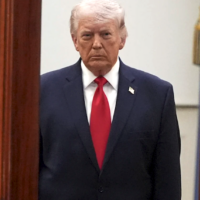
‘We’re fighting wars, we can’t take care of daycare’: Trump
U.S. Donald Trump’s proposed budget ramps up military spending amid the war on Iran while slashing domestic programs, raising concerns over economic priorities and public backlash.
-
The collapse of Trump’s mind leaves no alternative
In the four days between April 1 and April 5, President Donald Trump made a record of the collapse of his mind into genocidal violence which none of his officials can dissuade, limit, control, if they try, or even conceal.
-

Oil and the world economy
Oil prices have shot up in terms of U.S. dollars, and this in turn has been accompanied by a depreciation of other currencies, especially Asian currencies, vis-à-vis the dollar, causing even higher inflation in the periphery compared to the metropolitan capitalist centres.
-

250 Years of the Rising Organic Composition of Capital: The Factual Correctness of Marx, Smith, and Keynes
China’s high level of investment is simply the latest stage of an international process of economic development that has been underway for over two centuries.
-
How to think like a Marxist
Applying Marxist analysis to our daily lives.
-

Forest Service overhaul sows confusion, concern
In the Trump administration’s reorganization of the struggling agency, painful echoes of BLM’s past moves.
-
Iran is winning the war with the U.S. This is how
Iran is winning the war started by Trump. This is now admitted even in the Western media. Tehran has destroyed major U.S. military bases in West Asia, expelling American troops to Europe.
-
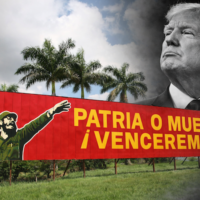
Why socialist Cuba is more democratic than the U.S
A country that presents itself as the “global model of democracy” continues to treat a small socialist island as a persistent threat.
-
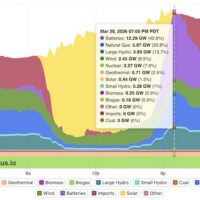
Night into day
The thing changing the world this year is… batteries.
-
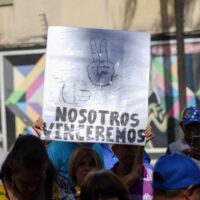
President Maduro’s trial will not bring justice, but it can weaken U.S. imperialism
Venezuelan President Nicolás Maduro and his wife and congresswoman, Cilia Flores, made their second appearance Thursday in a New York court, three months after being abducted by U.S. forces in a large-scale illegal strike against Venezuela that killed at least 100 people.
-
A review of Nancy Holmstrom’s “From a Marxist-Feminist Point of View”
ESSAYS ON FREEDOM, RATIONALITY AND HUMAN NATURE
-
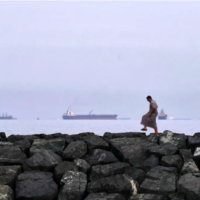
What the Iran conflict means for gas prices, clean energy, and the climate
U.S. gas prices could hit $7 a gallon if the Strait of Hormuz remains restricted through June. Here’s how that could affect EVs, wind, and solar.
-

“People believe that there’s something terrible going on in Gaza and nothing is happening to stop it”
Interview with Mimi, mother of Daniel from the Ulm 5.
-

Trouble for Nexstar merger that would create mega-network for MAGA
It’s not exactly breaking news that President Donald Trump endlessly attacks the media, or that his administration lapdogs quickly echo his gripes.
-

The shifting influence of Frantz Fanon on Walter Rodney’s anti-imperialism
Accounts of Rodney’s activism in Jamaica in 1968 often romanticise him as a wandering black intellectual […].
-

Russian oil, Chinese rice defy U.S. blockade of Cuba
A Russian oil tanker carrying 730,000 barrels of crude oil docked at the Cuban port of Matanzas this week, delivering the largest fuel shipment to reach the island in months.