
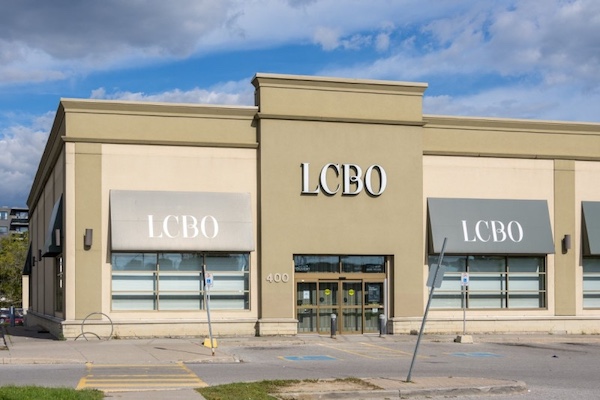
One of Canada’s most successful and popular publicly-owned corporations is about to be dismantled and possibly privatized. The LCBO, the Liquor Control Board of Ontario, has existed for a century, and generated around $120 billion in dividends for the province of Ontario, as well as providing about $43 billion dollars in wages to workers throughout the province. Besides making money, its original primary function was to rebuild the industry and market for beverage alcohol destroyed during Prohibition.
Since the Second World War the LCBO has increased sales and the volume of products it sells by a factor of almost 50, while its workforce has only increased by a factor of five (based on a review of LCBO Annual Reports from 1947 to the present). Growth depended upon progressively integrating information, inventory, distribution, communications, and retail systems. The workers and the operations are remarkably efficient. Casualization, fixed-term employment, and other forms of precarious labour—against which the LCBO union has fought since the 1960s—undoubtedly helped contain labour costs, but the contribution of labour restructuring to the LCBO’s productivity should not be exaggerated. The corporation’s long-term ability to generate dramatically greater sales and move vastly larger volumes rested principally on its success in developing the industry, creating markets, and applying technology and organizational innovation—not simply on extracting more work from fewer or more precariously employed workers.
In addition to operating at a remarkable size and scale, the LCBO has increased the competitiveness of Ontario’s wine, beer, spirits, and cider industries. This is because the LCBO was never merely a seller and distributor of beverage alcohol. From its earliest years, and particularly in relation to Ontario wine, it helped reconstruct, regulate, test, audit, finance, market, and modernize the industry itself. In the case of wine, for example, the LCBO’s purchasing power provided producers with access to a stable market; public programs linked to LCBO sales supported investment in wine production; and the relationship between the provincial government, the LCBO, and the industry helped encourage the transition from a weak post-Prohibition industry toward one increasingly concerned with quality, varietals, appellation, and international competitiveness.
In light of all this, it would be fair to conclude that Premier Doug Ford must be a fool to deprive the province of this revenue-generating enterprise. As Randy Robinson observed in a 2024 article for the CCPA:
The profits of the LCBO are a strange thing to want to give up, yet that is exactly what Queen’s Park is doing. Under the government’s new plan, a sizable chunk of the profits currently flowing to the public will now flow to private companies and their owners. The taxes these companies pay on the sales they make will not come close to making up for the LCBO’s lost profits.
But we can uncover the logic to his apparently irrational decision. For decades the neoliberal hard right in Ontario has been baying for blood over this corporation. Why? Precisely because it works so well, it is the perfect advertisement for public ownership. They are not trying to kill a corporation, they are trying to conceal the truth: public ownership can and does work.
How did this successful project of public ownership ever get started in Ontario, which has historically resembled a Conservative one-party state? The answer is a little surprising and the circumstances that brought it about have largely been forgotten.
Canada experienced various degrees of prohibition from 1919 to the 1930s. In some places it arguably lasted much longer. The prohibition of beverage alcohol is often seen culturally through the prism of its portrayal in American movies, which omitted a few important Canadian details. It was Canada, and principally Ontario, which acted as a narco state, that effectively broke the U.S. Prohibition (1919-1933). The prospect of lavish profits united Ontario in the smuggling operation, from the premier to the farmer. Most of the alcohol for supplying supposedly dry North America came from Ontario.
This meant the province was awash with booze and organized crime. There was community involvement in the trade, that is, explicit knowledge and support for the smuggling industry. No reliable count exists of how many people in Ontario’s border cities were directly involved in rum-running between 1925 and 1933. But the scale of the trade makes it equally implausible that organized smuggling was confined to a handful of gangsters operating in isolation. Some estimates suggest that one out of every four workers in the border cities were involved in some form of organized crime, but no one knows for sure. For organized crime, keeping records was not a valued skill. But the relevant question is not how many people were criminals, but how many lived within an economy in which large-scale illegality was visible, understood, and accommodated.
For example, the Windsor and the Detroit River formed part of a vast cross-border economy involving distilleries, boats, docks, warehouses, mechanics, labourers, customers, and distributors. In the most heavily affected Ontario border communities, it is reasonable to suggest that something in the order of a fifth to a quarter of the population may have possessed some degree of tacit knowledge of, tolerance for, or unwillingness to interfere with the smuggling economy, while a much smaller proportion would have been directly involved. This is an inference rather than a measured historical statistic. Research based on 30 major organized crime investigations similarly demonstrates that criminal organizations can depend upon wider circles of co-offenders, victims, bystanders, and others aware of their activities, whose silence or inaction helps shield those activities from authorities.
And the skills that were learned become transferable. Skills in one form of crime were found to be applicable in others. Ontario thus found itself with a problem: people were drinking too much and crime was rampant. This was the gift of Prohibition. The solution was to legalize the illegal, to recognize the unity of the narco state, in one organization. So, the LCBO Crown corporation was born in 1927, under the leadership of Conservative Premier George Howard Ferguson.
During Prohibition, moreover, consumers often had little means of knowing what they were drinking. Wine and other alcoholic products could be adulterated, fortified, or manufactured with little effective oversight. Industrial strength alcohol and colouring could be sold as “wine,” while other products were redistilled and altered with substances that could be dangerous or even lethal. The absence of effective inspection and reliable standards created a market in which the quality and safety of beverage alcohol could not simply be assumed.
The LCBO solved that problem. But contrary to popular belief it was never a neo-prohibitionist model for restricting or limiting access to beverage alcohol. It boosted alcohol consumption without appearing to exacerbate the related social and health problems.
The impact of alcohol consumption on human health is of course a subject of much debate, with recent research suggesting that even moderate drinking represents a health hazard. At the time of the LCBO’s creation, however, the political problem facing the province was not simply whether alcohol should again be legal, but how legal beverage alcohol could be separated from the saloon, organized crime, dangerous and adulterated products, and the social disorder associated with both unrestricted drinking and Prohibition itself.
The situation before Prohibition was one where Canadian whisky, beer, and wine were dominating the U.S. market and were exported globally. Also, beverage alcohol was largely not consumed for intoxication. Ontario wine before Prohibition was low in alcohol by volume. The culture of Ontario had been one where alcoholic beverages were drunk sparingly and were mainly limited to social gatherings and meals where drunkenness and excessive drinking were limited due to social pressure. The only aspect of pre-Prohibition drinking culture in Ontario not to be revived was the saloon, or grog shop. These were places where beverages in high alcoholic content were sold for the sole purpose of getting drunk.
The public widely supported strict oversight of beverage alcohol, while the industry itself needed people to feel they could trust the beverages they were selling. Ferguson proposed a tightly controlled system that promised simultaneously to legalize beverage alcohol and reduce its social harms, in part by helping the public choose products that were safer and ways of drinking that did not lead to intoxication and excess. As one LCBO Annual Report from the 1930s stated, the idea was to get people to drink “like on the continent of Europe,” with a meal, socially and not to excess but for enjoyment.
Restoring quality was a key mandate. The sheer volume needed to supply all of North America during Prohibition had diluted quality control to the lowest level. Without the captive market post-Prohibition, Ontario products were less attractive. They had lost their reputation for quality. The LCBO was focused on quality, especially with respect to Ontario wine. By the end of Prohibition, the domestic wine industry had suffered not only from the disruption of the legal market but from serious problems of quality and production. Inspectors reported preservatives, colouring matter, impure yeast, poor sanitation, and mould or fungus in wine vats. Some producers used other fruits, grain alcohol, or additional sugar to increase strength, contributing to a product whose quality and reputation had been seriously damaged.
The response, therefore, could not simply be to reopen the market and hope that consumer confidence and industrial standards would repair themselves. Wineries could be inspected, permits restricted or transferred, and producers encouraged to improve their practices. Joint work involving the LCBO and provincial health authorities promoted improvements in sanitation and production, while winery personnel received instruction in fermentation, processing, and scientific analysis. The LCBO also collected and tested hundreds of wine samples as part of this developing system of quality assurance.
The LCBO therefore had to do more than make alcohol legally available. It had to help make the legal product trustworthy. Control, inspection, and testing were not incidental functions attached to retailing; they were part of the process by which a legitimate market could be reconstructed. By controlling what could enter the legal system, testing products, monitoring production and enforcing standards, the new regime offered consumers something that the fragmented and often illicit market of the Prohibition years could not: a reasonable assurance that the product was what it claimed to be.
The reconstruction of Ontario’s beverage alcohol industries was therefore not simply the spontaneous recovery of private enterprise once Prohibition ended. Nor was it merely the result of the LCBO’s existence as a legal monopoly. It was a longer process in which public control was used to remove some of the problems created or intensified by Prohibition, restore confidence in legal products, improve production standards, and create the conditions in which a legitimate domestic market could grow.
This helps explain the apparent contradiction at the heart of the LCBO. Control was not simply imposed upon the market from outside; in important respects, control helped create the market. By establishing a trusted legal channel, reducing the circulation of dangerous and substandard products, improving quality, and eventually promoting consumer knowledge and demand, the LCBO helped transform beverage alcohol from a product associated with illicit traffic, uncontrolled private consumption, poor quality, and political conflict into the foundation of a large and increasingly sophisticated domestic industry.
A further stage in this process began in the 1990s, when the LCBO increasingly moved beyond controlling and supplying an established market to actively developing demand across the major categories of beverage alcohol. A broader marketing and consumer education strategy was implemented that helped transform beverage alcohol from a relatively limited commodity purchase into a matter of taste, knowledge, cuisine, and lifestyle.
This is important to understanding the LCBO’s later growth and productivity. The dramatic expansion of sales cannot be explained simply by the corporation becoming more efficient at distributing a fixed quantity of alcohol. The market itself was being expanded. Marketing created new demand; product development and industry support helped provide an increasingly diverse supply; and technological and organizational modernization allowed the corporation to meet that growing demand without proportional increases in its workforce. Productivity, therefore, was not simply a matter of extracting more output from existing workers. It was the result of a much broader process.
For all these reasons the history of the LCBO stands out as a case study in successful publicly-owned enterprises. It is all the more galling, then, that the neoliberal Ford government is moving to break up and privatize it. Of course, the LCBO has been in the crosshairs of neoliberal politicians for decades. Back in 1995, Mike Harris’s Conservative government promised to sell it off along with other public assets.
Moreover, as the workers at the LCBO face their contract negotiations the government is forcing them into an unsought strike. Ford will no doubt claim that because the unions are so ‘radical’ he must privatize the corporation.
In fact, despite the decades-long uphill battle against casualization waged by the LCBO’s union (represented by the Ontario Public Service Employees Union), 70 percent of LCBO workers are now precariously employed. The unions have also steadily fought against privatization and decentralization, the latter an interim union-busting measure. As Peter Hogarth notes in an article in Spring on the unprecedented 2024 strike:
LCBO workers are clear on the dangers of privatization; increased liquor sales to minors, greater likelihood of dangerous interactions with customers, less money for already underfunded public services, decreased choice and selection of brands, and more money to the richest grocery monopolies in the country.
Much of the pressure on workers and unions imposed by LCBO management in the name of efficiency was likely unnecessary and, in some respects, counterproductive. Employees had every reason to improve the corporation because they understood that its success was itself a defence of public ownership. Better security and working conditions could have accompanied the same technological and organizational improvements. For a public enterprise, the appropriate question is not simply how much output can be generated per worker. It is whether the gains created through public investment, institutional development, marketing, technology, and labour are shared among the public that owns the enterprise, the industries it helped build, and the workers who made that development possible.
But it is only by preserving the LCBO as a public corporation that we can hope to maintain union jobs and improve working conditions in the beverage alcohol retail industry.
The LCBO is, in many ways, one of Canada’s great public success stories, generating approximately $120 billion in dividends for Ontario. Born from the chaos of Prohibition, it transformed a dangerous and unregulated market into a trusted, competitive industry through public investment, quality control, technological innovation, and market development. At a time when there is an intense drive to privatize public services and assets, the LCBO makes the inconvenient case that public ownership can be efficient, profitable, innovative, and serve the public interest. For all too many actors in Ontario’s business community and government, the problem isn’t that the LCBO failed; the problem is that it succeeded.
Willy Marz is the pen name of a writer and union activist in Ontario’s Niagara region.