
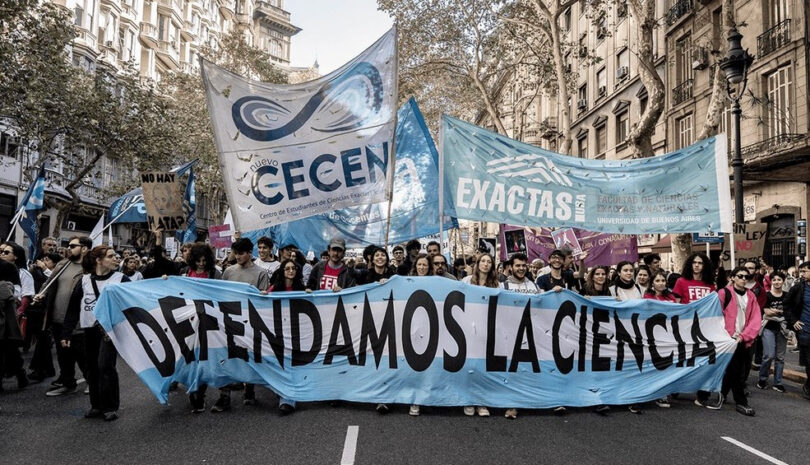
In the following essay—first published in the February 2026 edition of Revista Una Salud, the magazine of the Argentina Association of Public Health, and here translated into English for the first time—disease expert Oscar Daniel Sálomon explores the 2025 decommissioning of Argentina’s National Institute of Tropical Medicine (INMeT). Sálomon weaves together the wider political economies, sociopsychologies, and epistemological perversities of the Milei administration’s frenetic dissolution of one of South America’s newer and effective disease research centers.
Across budget lines, political tracts, occupational hazards, and press conferences, he tracks the accelerating rotting-away of the commitments people must share if they are to act as a society in the face of environmental and health dilemmas. Sálomon offers us an example to follow in thinking through the wreck of it all. It would appear that the capital-led flight from empiricism that philosopher of science Helena Sheehan has described so well isn’t merely a marker of a Global North keeling right.
—Rob Wallace
When idealists like Don Quixote confront their enemies, the voices of prosaic materialism correct them that these giants are merely windmills turning their sails. The Man from La Mancha—and other defenders of social justice—understand that what others naturalize as the wind is in reality an artificial current created by the powerful waving their own arms.
Only these toy windmills, never failing to try to emulate one-eyed cyclops, spin in the direction of a peculiar choice, repeatedly asserting their gusts are really hurricanes of our era. The powerful stand in the way, trying to block the path of the humble mounts of the riders, their only armor honesty. Like giants atop Don Quixote, the systematic attack on the principles of equity upheld by education and public health, the offensive against culture and science’s efforts to support the marginalized, is manifesting itself today across much of the Western Hemisphere and beyond.
Why then fragment this globalized phenomenon and analyze as a case study the destruction of Argentina’s National Institute of Tropical Medicine (INMeT), a relatively small institution in one of the many countries presently subjected to reactionary autocracies of both old and recently re-emerging origin?
Because the ideology and methods used to eliminate INMeT are exemplary, revealing the intentions of a project of profound social change, disguised in circumstantial justification.
Because to achieve this, as we will see, the typical tools of anti-democratic regimes are employed: legal arrogance; lies presented as axiomatic arguments; speed and violence to orchestrate a sudden demise; extortionate intimidation; and the plundering of physical, human, and symbolic capital.
Today, the perpetrators can boast of their temporary successes, which exceed the mere destruction of an institution, demonstrating the widespread penetration of an ideology that abhors solidarity as the most basic of rights. For despite the national and international condemnation from colleagues and associations generated by the dismantling of INMeT, the complicit silence of those who should have spoken out was also achieved. They remained silent out of fear, opportunism, or petty revenge and rubber-stamped resignation with a phrase that should be inscribed on our new gates of hell: “It is what it is.”
For analytical purposes, the continuous time-space spectrum of the INMeT’s annihilation process can be divided according to French historian Fernand Braudel’s criteria, which we also apply to eco-epidemiology and into the macroscale and long-term dimensions. Here, we find the ideological framework wherein neoliberal and authoritarian discourses delegitimize the State as a guarantor of collective rights is inscribed. We track the imposition into the mesoscale or medium-term dimension, which corresponds to our local scenario. Finally, we explore the microscale of short-term institutional and individual action.
The medium-term dimension includes, among other things, the country’s immediate historical context, the long-standing structural problems that could have been treated without this destruction, the perceived everyday economy, and the age and geographic stereotypes represented by their very proponents. All narratives that justify the disappearance of essential institutions as a matter of modernization.
These components of the spatiotemporal mesoscale are constitutive of the current monologue of power, which displays, as if futuristic mirages, the reflections of antediluvian ideas. However, they are only of interest to, and can only be interpreted within, the ephemeral national framework of the opportunists of the moment. Therefore, in this piece, we will refer to the two extremes: the instrumental microscale and the ideological macroscale.
If I don’t exist, I don’t think
“Have you no sense of decency, sir?” With this question in a televised hearing, June 9, 1954, U.S. Army Chief Counsel Joseph Welch, tired of false accusations, ended Senator Joseph McCarthy’s career. Publicly exposed for his lies, this persecutor—whose only merit was having built himself up as judge, prosecutor, and executioner by bombastic speeches, false testimonies, overblown risks, and invented apocalypses—returned to his true dimension as a mediocre figure, condemned to social punishment even in a conservative 1950s United States.
On July 7, 2025, another summer 71 years later, the afternoon before the extraordinary powers delegated by Argentina’s legislators to the president expired, in another televised trial, but no defense attorneys present, a presidential spokesperson used only twenty-two seconds of a press conference of errors and misreadings to condemn and “dissolve” fourteen years of work by INMeT.
He needed less time to denigrate the efforts of the agents based in Puerto Iguazú and Tucumán than used by the Minister of Deregulation at the same conference, announcing that the President would gather two hundred officials to celebrate their diligence in destroying essential state agencies.
In the government’s official gazette the following morning, Decree 458/25 formalized the announcement on the basis of a Ministry of Health report (IF-2025-72085018-APN-ANLIS#MS) that promoted the dissolution of the National Institute of Tropical Medicine, quoting verbatim some of the report’s defamatory statements. The technical report was signed five days before the presidential decree by Dr. Claudia Perandones, head of the National Administration of Laboratories and Health Institutes (ANLIS) “Dr. Carlos G. Malbrán”.
INMeT, created in 2011, was integrated into ANLIS in 2019 at the initiative of the same Dr. Perandones, during her previous term 2018 to 2020. And although her personal decision could be explained as the handover of an Institute that “can be dissolved” as a sacrificial lamb to ingratiate herself with the new gods, the text of the report, its false claims, fallacies, and contradictions—beyond being provocatively insulting to the workers of INMeT, beyond the method of implementation that recalls the worst of dictatorships, beyond the circumstantial excuses—poorly conceal its ideological motivation.
As in the case of Senator McCarthy, the systematic lying and unfounded defamation launched as an accusation out of an asymmetrical power relationship, become tools of the champions of a passing emperor, which, whether by conviction or convenience, prevents those who think differently from exercising their right of reply.
Budgetary obfuscation
In its budget analysis, the Ministry of Health IF report indicates that INMeT’s current credit for 2025 is US$617,692. Given that the authorities of ANLIS have committed to maintaining the contracts of the staff dependent on the Ministry of Health in exchange for silencing any protest, if “Clause 1” corresponding to salaries is maintained, closing the institution, according to the figures published by the central government itself, offers the equivalent in “savings” of US$102,994 per year.
Even should the signatories fail to keep their word to maintain the contracts, a likely scenario given their denial of the IF budget’s existence when it had already been officially approved, the total annual budget is several orders of magnitude less than the value of the INMeT’s 11-hectare plot of land, the 10,000 m² in laboratories (including areas of Biosafety Levels 2 and 3), the six residences, the high-complexity equipment, and the human capital trained over the last decade.
Thus, any investment made by the national government to reach INMeT’s level by 2025, which they are structurally dismantling, is equivalent to several hundred years of INMeT’s fixed and operating expenses, the very excuse for its closure.
The IF states, “Organizational structure: There is no approved structure.” The authorities cannot ignore that, since the creation of ANLIS in 1997, thirteen years before the creation of INMeT, there was never a “second opening” or formalization of institutional structures below the central administration. Therefore, no structures beyond those of the National Ministry of Health have been approved since that date, and they never reached within its decentralized or deconcentrated agencies. Nevertheless, in compliance with INMeT regulations, a proposed structure, discussed with the relevant agencies, was submitted in 2011, within 90 days of its creation, and was subsequently resubmitted in an updated version whenever the authorities or auditors requested it.
When the IF refers to staffing levels, it implicitly suggests the numbers of agents are an indicator of the limited impact of the institutional disappearance. Neither the CONICET researchers—despite their workplace at INMeT and their profiles dotting the websites of other ANLIS institutes—nor the local economic impact overlooking the outsourced cleaning and security staff are considered.
The IF budget also fails to take into account that upon INMeT’s relocation from a borrowed 300 m² building to the 10,000 m² building, there have been, and continue to be, legal restrictions on the hiring of new employees (from 1-by-1 to 2-by-1 and 3-by-1 rotations) as initiated by Decree 632/2018 by the same administration that appointed Dr. Perandones in her first term as head of ANLIS.
This regulatory framework prevented the integration of new human resources, unless extraordinary mechanisms such as patronage and nepotism were used, which INMeT refused to partake throughout its history. Furthermore, admission and regularization competitions across job profiles developed over more than a year—with exams taken by applicants—were annulled in December 2023.
“Moreover,” the IF claims, “even in those functions that INMeT actually performs, the Institute’s performance presents significant weaknesses,” noting that “while budget execution reached 98.73%, the fulfillment of the physical goal ‘Development of Research’ was significantly lower, given that only 67.9% of the 20 planned research projects were completed.”
The percentage indicated in the IF is correct, although it represents a superficial reading of the supporting documents. While only 19 of the 28 projected publications were completed on time, omitting the officially submitted justification for these delays, it was also reported that the shortfall would be covered in subsequent periods, as was indeed done.
As is standard practice, publications in international open-access scientific journals had to be restricted in 2024 to those journals that did not demand publication costs, due to budgetary and foreign exchange difficulties. These latter journals have a lengthy delay from peer review to actual publication, which can be more than a year.
Therefore, the stated goal included the committed number of completed research projects with articles approved by peer reviewers but still in press. In the first quarter 2025 goals report, while four publications were promised, eight were published, representing 200% of the initial goal.
Whereas the IF highlights a single deficient target, all other targets for 2024 were exceeded:
- knowledge dissemination: documents committed/executed 34/55 (+161.8%);
- technical advice: report completed 50/92 (+184.0%);
- training: course 12/25 (+208.3%);
- routine event diagnoses: laboratory diagnoses 18,000/21,545 (+119.7%).
These values are relevant because they also point to the increase in the reference and diagnostic roles of INMeT, roles, as we will see later, that the IF claims were not fulfilled.
Where putative efficiencies meet political objectives
There’s a second group of fallacious assertions from the IF report atop the structural-administrative ones we’ve discussed. These concern INMeT administration:
Overlap of functions with other National Institutes (…) [including] the National Institute of Parasitology “Dr. Mario Fatala Chaben” and the National Institute of Human Viral Diseases “Dr. Julio Maiztegui”…clearly duplicating the stated functions of the aforementioned INMeT (…) which fragments institutional capacities, preventing the coordinated use of technical and human resources.
The logic of concentrating research and evaluation of strategies to contribute to the control of tropical diseases 1400 kilometers from the subtropics not only disregards the value of fieldwork and its federal nature, but also implies inefficiency and high costs—precisely the accusations used to justify actions against the State.
Continuously maintaining researchers in the field reduces expenses by avoiding repeated field trips, which are always subject to failure due to weather events. The results are more reliable and better contribute to health strategies because they are continuous over time, covering all seasons. Health recommendations are more operationally sustainable because their implementation is discussed by way of fluid and ongoing relationships with local authorities and the communities into which the institution is integrated.
To take away highly complex equipment already installed in and unique to the region, in order to duplicate them in Buenos Aires institutes, with significant transportation and recalibration costs, is unnecessary and redundant, serving as the very counter-example of “functional efficiency,” actually impeding the coordinated use of technical and human resources.
Furthermore, such a plan would increase epidemiological risk by requiring, as a matter of routine surveillance or in the event of epidemic outbreaks, the transport of sensitive biological material to non-endemic areas, delaying rapid and timely intervention. Perhaps INMeT—as a federal, inclusive health project focused on vulnerable populations, located on the borders, serving as an epidemiological shield, an actor of health sovereignty, and a promoter of regional integration—is simply incompatible with the current management’s objectives.
The absolute centrality of the point of the research program and its interventions seems to contradict the IF’s statements regarding the “over-dimensioning of the jurisdictional structure,” and that the Institute’s disappearance does not represent “a detriment to Public Health (…) and the fundamental rights of the population.”
Furthermore, citing the study of common pathogens as mere “overlap,” making no consideration of territorial objectives, would imply that organizations such as the CDC in the U.S. or Fiocruz in Brazil should only engage operations in Atlanta or Rio de Janeiro. Even within ANLIS itself, aside geography, topics such as hantavirus, dengue, or COVID-19 are covered by different institutes from different perspectives.
There are departments and institutes that share the same name even in the same city, and operational units dependent on a center in Buenos Aires hundreds of kilometers away. But whatever these connections, working on a topic mandated by another institute often bleeds out the necessary place- and context-specific variation in methods and topics.
Accepting the arbitrary logic of elimination by nominal similarity would encourage a domino effect of lumping institutions all the way to one Kafkaesque office for the entire country, a process damning of those who thought themselves saved in sacrificing their colleagues, finding instead in the paraphrase of Martin Niemöller’s well-known poem that First they came for INMeT, and I said nothing…
The hard work in building INMeT for the Argentinean people
A third group of arguments out of the IF report focuses on maliciously discrediting INMeT’s fourteen years of continuous work. No matter what was achieved by a community of researchers, support technicians, and administrators committed to the public health project that INMeT represents, alongside the wider breadth of authorities and collaborators who cooperated to great effect.
The IF acknowledges the creation of INMeT by national law. It omits mentioning that from 2011 to 2019, INMeT acted as a decentralized agency, if also directly dependent on the Ministry of Health, and that the law founding it was unanimously passed in both houses of Argentina’s Congress by legislators of different political affiliations.
The IF simultaneously presented itself as if it were unaware that once INMeT was cemented by its inaugural workshop, equivalent institutes across Latin America advised on INMeT’s direction. The report ignores that for a year, thirty experts from different disciplines, institutions, sectors, and geographic areas developed the Institute’s mandate of missions, functions, and activities. By an extended consultation, the new Institute recruited more than 1200 submissions from scientific and health advisors.
This mandate was operationalized through a series of workshops with key figures from across the country and region on a wide array of topics, including housing and health, Indigenous communities, and venomous animals. The incoming data and recommendations were compiled into whole volumes of interdisciplinary updates and proposals of work the Institute could partake.
The conceptual and operational framework collectively developed within the theoretical framework of territorially based eco-epidemiology wasn’t only unprecedented for this type of institution in Argentina. The process by which the whole of the health community helped found the Institute contradicts the current administration’s insistence on replacing consensus with unilateral decisions.
The IF—the Institute of Health—concludes that INMeT’s actions
are, in fact, limited to tasks related to human resource training and the development of basic research with little influence on public policy at the national level and no impact at the clinical or health level….
Although they possess the equipment and technological capacity, they have not developed any reference diagnostic activities in all these years, nor have they actively participated in the laboratory networks that constitute the ANLIS MALBRÁN….
Likewise, the organization has not carried out any concrete actions regarding the prevention, control, or treatment of tropical and subtropical diseases.
These condemnations’ assertions need to be analyzed for their underlying intentions.
By characterizing the research as basic and without impact, the IF authors choose to ignore the numerous and well-documented works the INMeT completed in coordination with ANLIS’s national reference institutes, all as stipulated by the regulations of the law creating the Institute.
Many examples of these “non-impact” research projects served as cutting-edge projects in studying insect-borne diseases in Argentina and the broader region, contributing to the surveillance strategies of other countries, including Brazil, Paraguay, and Uruguay. Other work helped develop the synthetic antigens needed to produce antivenoms and novel management strategies in treating patients injured by venomous animals endemic to the region.
Similarly, multi-institutional studies of bacterial, viral, and ectoparasitic infections in animals wild and livestock in contact with humans—such as in the National Park, in provincial reserves, and on farm edges—proved exemplary cases in One Health. These studies helped preempt what the World Organization for Animal Health identified as risks in disease re-emergence. This latter project was presented in a webinar organized by the One Health four-party leadership—WHO, FAO, UNER, OMSA—on the very day of the INMeT dissolution decree.
The report also refused to account for the Institute’s risk assessments of urban outbreaks of yellow fever, occupational dangers, socio-environmental factors for pathogen exposure, the impact of climate change, and evidence-based surveillance and control strategies for tropical diseases. The aforementioned and many other markers of “basic” research contributing to public health strategies are developed in the nearly 300 published articles, 36 completed postgraduate theses, 40 books and chapters, and numerous co-authorships in PAHO and WHO manuals.
Among other examples of alleged “limited influence” are practical guides for integrated vector management across Latin America and recommendations for achieving sustainable development goals for neglected tropical diseases worldwide in the post-pandemic period.
Undoubtedly, the subjective evaluation of the activities carried out by INMeT by the IF authors is consistent with those who explicitly repudiate multilateral organizations, coordinated and inclusive international agendas, and the joint and synergistic work of multiple actors. Regarding the “human resources training (…) of little influence,” the well-documented theoretical-practical courses for national and international agents are omitted here for Latin America; internships for professionals from Spain, England, the United States, Canada, and most of the Hispanic American countries; and the TDR Latin America courses to improve the capacity and quality of biomedical research.
It is pertinent to mention here the proposal to develop a technical program in conjunction with the National University of Misiones for the integration of local youth into the professional work of INMeT, offering these youth both a university education and job opportunities to meet the local demands of private laboratories.
The failure to develop a “reference diagnosis” or to be part of the national networks of ANLIS ignores the fact that these networks must respect provincial jurisdictions, which is why INMeT coordinates with them and with national references. Similarly, the “concrete actions regarding the prevention, control, or treatment of tropical diseases” fall in by mandate and law to other operational bodies, as was indicated to INMeT by national and provincial authorities.
The references to diagnoses and “clinical impact,” on the other hand, appear to be associated with a conceptual bias regarding the role of public health laboratories maybe appropriate for the time of Pasteur and Koch but which in this century is only retained by a certain kind of health etiology based on the individual alone and the profit-making objectives of commodity medicine.
Public health and INMeT’s mandate both, however, have long incorporated the eco-epidemiological framework, as previously mentioned. This multidisciplinary approach diagnoses events and monitors processes rather than individuals, contributing to the development and evaluation of strategies and tools for prevention, early warning, management, mitigation, and socio-environmental control of disease outcomes long before individuals are affected, with an effective, efficient, sustainable, and participatory impact.
Beyond these important theoretical considerations, the achieved project goals described around neglected pathogens in the previous section and INMeT’s 2022 designation as a reference center for the PAHO Regional Leishmaniasis Program demonstrate its reference quality was recognized in the region in a few short years.
Finally, the IF attempts to divide-and-conquer, trying to create non-existent conflicts between synergistic institutions: “This limited activity (of INMeT), in contrast to the broad projection and impact on the health system of the activities and achievements of other institutes within the ANLIS system.” We will not fall into the trap of comparing the significant output of INMeT and its professionals with that of other centers and institutes, especially those located far from major urban centers and with little municipal influence. This would be to share the pettiness of a strategy in overgeneralizing thought that disregards the particularities of scientific production in the real world.
We must add that it is overlooked that INMeT was created in a disadvantaged environment, without the support of a previous working group or a concentration of nearby university resources.
That in the ten years since the land was transferred to the Institute, attention had to be given to building design, consultation with international institutions, the environmental assessment of campus land, the provision of safe water and quality electricity in the face of continuous outage, the laying of kilometers of fiber optic cable, the paving of access roads from the center of the city, the extension of public transportation, and the equipment and specificities of Biosafety Levels Two and Three, including wall and baseboard coverings.
The foundational stage included addressing details such as the specially designed washing sinks and stainless steel countertops, the electrical load distribution by kind of equipment, the safety railings for washing the exterior glass, the quality of the pipe joints and the design of the water treatment plant, and the expansion index of the ceiling tiles. And the people involved, of course, including packages of incentives to recruit professionals, who had to relocate with their families from different parts of the country.
A million details needed to set up a national institute for the long life of the country, all while positioning the Institute as an already important player in the national and international scientific and health fields, presiding even now over international and Argentinean congresses in Puerto Iguazú.
The method of Nacht und Nebel
The Third Reich’s decree of December 7, 1941, “Directives for the prosecution of offenses committed against the Reich or the Occupation Forces in the Occupied Territories,” is otherwise known as Nacht und Nebel, “Night and Fog”. Decree 458/25, requiring no secret action as it was issued during a sudden absolutism disguised as democracy, shares with the National Socialist regime anti-republican violence; unbridled perversity; a haste to reach a point of no return; official looting; and methods in instilling fear, silencing protest, and attacking any organized objection.
The program is underscored by representative moments in INMeT’s dismantling:
On the afternoon of July 7, 2025, people outside ANLIS informed INMeT staff that the presidential spokesperson had announced the Institute’s dissolution at a press conference 1400 kilometers away. The decision was based on a report denied until that very day by its own authors.
On the morning of July 8, 2025, Decree 458 was published in the government’s official gazette. The decree disavowed all local management and administrative activity, stating that “INMeT no longer exists” and prohibiting the use of its name from that moment onward.
On the morning of July 9, 2025, outsourced security personnel prevented INMeT staff with previous permits from entering the Institute because it was a holiday. These permits for daily driving in Iguazú, where the INMeT campus is located, had been required from Buenos Aires.
Since July 10, 2025, the Ministry has been extorting INMeT staff to remain silent and refrain from protesting in exchange for keeping their contracts. All workers are to be suspected of potential theft, so security personnel now search bags and backpacks and call the police in case of any alleged incident.
An example of intimidation. I received a message through third parties that I would be prosecuted for my statements against closing INMeT. An Institute security agent told me that a police commissioner had called him to find out where I lived and what vehicle I used.
A week after the decree closing INMeT, a delegation from ANLIS headquarters arrived unannounced, removed equipment, and sealed other equipment that could not be taken out, placing trash cans and ultra-cold (-80°C) smart equipment in the same lot. The process of transferring staff began, with losses in salary upon assignment to institutes not located in disadvantaged areas, with the promise of commissioning them to local institutes, but without any guarantee of continued funding for their research.
Staff from the National Scientific and Technical Research Council (CONICET) working at INMeT were dismissed upon derogatory comment. The ANLIS delegation attempted to remove equipment, even as professionals working that morning were caught unaware that their studies were going to be interrupted. The wrecking crew of a delegation announced the definitive closure of the building due to the imminent transfer of ownership to the Agency of State Property Management (AABE) at the end of the month, a transfer that to date, months after the decree, has not occurred.
The delegation created a new administrative communication channel between Iguazú and Buenos Aires dedicated to the destruction process, dismantling the executive hierarchy and regular administration of INMeT. It is noteworthy that just three days before the arrival of the liquidators who closed INMeT and terminated all its activities acting “on behalf of” the ANLIS authority, the continuity of regular work was guaranteed at a meeting in Buenos Aires convened by that same authority, including finalizing field trips and projects up to a minimum of three months, while the entire administrative process was to be carried out.
The abject contradiction between the verbal commitments and the facts, the lack of communication with those affected, and the evident dearth of planning were evident even in the ignorance of basic biosafety principles, including the handling of undecontaminated instruments that the researchers were working with. This demolition was not only an administrative act, but a concrete threat to biological and ethical safety.
In the second week dismantling INMeT, the equipment removal commission returned, having selected items as if at an auction, again demonstrating unprepared improvisation as they expressed surprise by the size of the Institute’s inventory. The INMeT staff were reassigned to yet another round of referral institutes, changing those assigned the previous week because of a variety of HR administrative issues that weren’t considered in the initial attack upon the Institute.
There was a lack of awareness of the responsibility for biosecurity of the biological material. The closure of the Institute left workers without roles or assigned workspaces, 42 unfunded projects cut short, 15 theses interrupted, and the insectariums and parasitic cultures lost out of negligence. Of particular note in this regard is the cessation of breeding the Aedes albopictus mosquito, already present in Misiones, whose experimentation was restricted to INMeT staff to prevent the accidental spread of an arbovirus vector that could colonize as far as Tierra del Fuego. Equipment continued to be removed and furniture delivered to third parties.
Humiliation was heaped upon raw pillage. I was told I had to leave the institutional housing because I “had no ties” to the Malbrán Institute, with which I first had a connection as a volunteer in 1970, during my second year of high school. During the move, a security guard supervised my household to ensure that “nothing was stolen” and that I only removed my furniture, according to an authorized list secured with a signature.
Three weeks in, the proper authorities asked about the weights and sizes of large structural equipment, such as the two Volvo Penta generator sets, each with a 550KVA capacity and a 1000L tank, and the air conditioning units from Biosafety areas 2 and 3, and the rest of the building, including Carrier VRF and Trane TRF converters. Third parties informed me that the demolition teams were requesting heavy transport equipment, as removing said equipment would cause structural damage to the building, and that they were offering the equipment pell-mell to different laboratories.
The wrecking crew flinched bathroom faucets and stainless steel countertops, presumably to build or equip institutes elsewhere, or for their personal use. Similarly, they prioritized taking computer and molecular biology equipment, according to the undocumented preferences of those who carried out the looting.
Tragedy meets comedy, hubris farce. The character who sees himself as a hero against the state dismantling of the 1990s directs its dismantling in 2025. The on-the-ground lieutenant, an expert in unmasking mechanisms of oppression for the defense of the oppressed, now manipulates the discourse to pretend that the victims thank their victimizers while digging their graves, first diminishing their achievements, then telling them their work is important. A champion of peace is now a general leading his troops ordering the round-up of prisoners of an administrative war.
The administrator evaluating the regional health-scientific projection and impact. The expert technician who personally benefited as an advisor during the construction of INMeT benefiting again scavenging it. The champion of the popular rebellion revealing himself an exclusionary egomaniac fueling serial hatred. And hovering over it all, a Greek chorus, a troupe speaking more with its expediently persistent silence than with its words.
Self-exculpation is the order of the day, turning victimization into an empirical appraisal. In the IF report, philosopher of technology Alejandro Piscitelli put it in another context, we find the
judgments (assessments) disguised as affirmations are disguised as statements (descriptions) that prevent us from seeing that, often, we attribute to others defining properties that are nothing more than the result of our projections.
However, in the short, truly very short, duration, the brutality of the authoritarianism used to destroy a health project, the arrogance of ignorance in implementing that destruction, the humiliation assumed and functional passivity of groups with a history of active objection, would not have been possible without a long-lasting ideological framework that allows the naturalization of a lack of empathy for others, on the one hand, and lies and insults as legitimate tools of oppression, on the other.
Potemkin countries finding strength in dissolution
The propagators of egocentrism as the day’s norm proclaim their main objective the annihilation of the Leviathan state, the supposed oppressor of freedom. In that context, the dissolution of social cohesion isn’t merely collateral damage from a de facto leader, but also the core mechanism to be destroyed to reach some putative promised land. The eschatological here meets the bureaucratic. That dissolution, the action of undoing something by ending the union of its components, breaking the ties or bonds existing between people, is precisely the term deployed in the decree dissolving INMeT.
The resulting figurines present themselves as something shiny and new, but they adhere to an old doctrine of concentrated economic power, already formulated by Baroness Thatcher, the British prime minister, the once enemy now mirror:
And who is society? There is no such thing! There are individual men and women and there are families and no government can do anything except through the people and people look to themselves first.
Obsessed with spontaneous originality, they reincarnate preexisting scenarios to reproduce illusory countries, the deceptive villages of Potemkin now here nationalized, after the powerful governor and lover of Tsarina Catherine II, who was in the habit of disguising himself while disguising villages. These nonexistent villages were repeated along the Dnieper River, with dancers dressed as peasants and fake sets, to deceive emperors, the nobility, and foreign ambassadors. Observers of a fictitious world from the comfort of the luxurious imperial ship, this time without approaching the shores, who consciously accept being deceived for convenience’s sake.
The current moment seems to replicate the despotism of three centuries ago, now without enlightenment, but from a technological individualism closer to the military collectivism of a hundred years ago, both rooted in anti-democratic mercantilism. As Polish-British sociologist Zygmunt Bauman pointed out about the Holocaust, these phenomena are not anomalies of history, but extreme expressions of capital accumulation.
Unlike the previous century, profit maximization is now centered on the libidinal self, with fewer of the nationalist, religious, or paternalistic trappings, although with many of the same masks of liberalism, a strategy long used since the Industrial Revolution. Perhaps that is why without blushing some of its spokespeople in Argentina propose child labor or organ trafficking.
To understand the current phenomenon, however, other historical influences that contributed to its formation must be taken into account. The medium is the message, as Canadian philosopher Marshall McLuhan put it, became popular as a principle that relegated content to a secondary role, with the development of 20th-century advertising emptying the remaining content, transforming messages into prompting compulsions unrelated to reasoning.
Straddling the turn of the millennium, we add the rapid technological advances in communication right into the bedroom. What originated through the internet, with the aim of generating a network of democratic science and a participatory horizontal democracy, devolved into the banal glorification of the ego, hic et nunc, the self, here and now, whose evolution was described by Bauman himself as the liquid society and later by philosopher Byung-Chul Han as the transparency society.
The transcendent concept of deep community, as an interwoven three-dimensional loom of solidarity turned into a surface without thickness, formed by encapsulated individuals obsessed with the fleeting recognition of strangers. This fragmented system thus proved fertile ground for the fanfare that devalues democratic representative systems and proposes the extinction of the state as guarantor of an equitable distribution of socially produced wealth. Anomie is proclaimed, pointing to governments and laws won through centuries of struggle for social justice as the very source of the enslavement of the self.
Under the motto of “every man for himself,” the historical reality is concealed: only those who have always been saved will be saved. Under the principle of a supposed autonomous market equilibrium, the numerous examples of the absence of state control resulting in the absolute domination of society by parallel powers beyond mutual responsibility are ignored. Mercenaries of hate—manipulators of continuous scandal as a mechanism of bewilderment—justify empty insults in a supposed cultural battle, hiding that the very concept of such battle was created to combat the long-standing, unbroken hegemonic discourse that they themselves represent today.
Consequently, the advertising drive, the promotion of technology as a tool for self-referential gratification, the tireless repetition of false premises—another kind of Potemkin village—to impose the vanity of the self over the empathetic “we” that always permeated the thinking and actions even of many of its critics.
These are some of the referential terms that converged and contribute to explaining the environment where the precipitate destruction of INMeT occurred, the methods used, and the lack of reaction from actors traditionally responsive to similar events of much lesser magnitude.
While INMeT received the explicit support of institutes and thousands of colleagues from across Argentina, America, and Europe, the capacity for collective opposition outside of those directly affected remained dormant, as during a wartime aberration. Some peers and representative bodies negotiated the prioritization of protest according to the benefits of their own clan. To justify themselves to their own ethical principles, they reframed reality as the survival of the most submissive, not the most resilient. As anthropologist Gregory Bateson proposed, we always select and edit internally the perceived reality to adjust it to our system of ideas about the external world.
Open endings for a kopek
“Moscow burned down with a one-kopek candle” is a 16th-century Russian aphorism that became popular in the rest of the West in the 19th century following the Napoleonic invasion, another self-proclaimed emperor. Scorched-earth as a defensive strategy. A city burned down with a penny candle is a fatality. However, razing a city deliberately to save a penny is criminal.
Therefore, on a micro level, the perpetrators and serial haters of all stripes must answer to justice as criminals for the alienation of state property: what they took, where they took it, and to meet what need, without the usual excuses of the “lesser evil,” “following orders,” or “due obedience” valid enough as expedient defense.
To think that what was ignored in the INMeT technical evaluation was due to ignorance would be an insult to our intelligence. Wrecking crews from Buenos Aires to Puerto Iguazú knew exactly what they were doing. However, demanding their legal or social condemnation is no J’accuse of personal vindication. That would be to recapitulate these petty thieves’ petty motivations.
The objective of exposing the deceptive discourse of ambiguities and its repressive methods is to prevent the recurring ideological cross-dressing of these characters from allowing them to reform and re-offend in the future.
The entourage that opted for silence, on the other hand, will share the shameless complicity of the open deniers. They will use the despoiled equipment like someone using silverware that they know belonged to people who died in the gas chambers. Or they will appropriate thematic lines and impose institutional affiliations and even co-authorship like the agents of repression, who disappear the parents to take their children for themselves—to recall a different Argentinean moment—so that “they may have a good future without the bad influences of their origins.”
On the long-term scale, which we must hope will not be so long, we will not dwell here on the constitutional and ethical validity of the extraordinary powers granted to a single individual, ceded in times of peace by the representative bodies to an autocrat. Several institutions were attacked on the day that this delegation of powers ended. Those with greater social weight due to their iconic status, greater media access through their association with corporations, or union support out of a volume of workers have advanced in their legitimate defense, although with the field of struggle divided.
Let us hope for the best for each and every one of them, but let us work for a better future for the nation-state that we collectively represent. In his recent invocation of hope, Byung-Chul Han calls for avoiding paralyzing pessimism, which will fail to find a solution because it has stopped looking for one. That is why indignation is not enough. We must be proactive, rebuild from the ground up, recover dialogue, engage intelligent discussion, and converge from different perspectives to develop alternative, feasible, instrumental, and concrete political proposals beyond slogans.
We must unmask the merchants of insults who celebrate international debt as success. We must disenchant our fellow countrymen who still believe in the promised future of shameless individualism. We must reinstate the conviction of our shared destiny through the dignity of others, making the guiding values of social justice our objective.
On a microscale, those of us who have the honorable task of passing the torch in the relay race of science always hope that all the proverbial eggs hatched will be birds of paradise. Sometimes a pair of Komodo dragons hatch, which want to eat the other chicks in the nest. We must relocate these latter to other dragons sustaining themselves by cannibalism. If, because of these disappointments, we stop accepting eggs to hatch, we will never have the pride of seeing them grow into their brightest best.
It took a bombastic book burner and a mediocre university bachelor with a penchant for dressing up in costumes to restore our idealist Don Quixote. Instead of trends created by powerful giants, he came to believe the mills turned by the wind of the moment. “In the world in such a conjuncture, that proved his good fortune,” his epitaph proclaims, “To die sane and live mad.” If that is the case, it will be preferable to live and die mad, but now no longer as solitary gentlemen.
In this century, to continue the path of the knight of La Mancha, we have a troop of young mounts and riders, birds of paradise on the wind. As Dominican essayist Pedro Henríquez Ureña wrote—I quoted him in the founding speech of INMeT in 2011 and repeated at the inauguration of INMeT’s building in 2022—
Utopia is not an illusion, but rather the belief that ideals are achieved without effort and sacrifice. We must work. Our ideal will not be the work of one, two, or three men of genius, but of the sustained, faith-filled cooperation of many, countless modest men (and women).
And for the call to rebuild the collective, we must keep in mind the words of Spanish poet Antonio Machado, walking many roads and opening many paths. He pointed out the arrogant and the pedantic, drunk on black shadow, “bad people who walk and pollute the earth,” in order to rescue the many:
Where there is wine, they drink wine; where there is no wine, fresh water. Good people who live, work, pass through, and dream.