
-

A difficult return – race, class, and politics in Rodney’s Guyana
In 1974 Walter Rodney and his family returned to Guyana. Rodney immediately faced a country divided between the Indian and African working class, and the brutal and divisive regime of Forbes Burnham. Rodney produced an impressive body of historical work which provided a Marxist explanation for the divide of the country’s working people. Chinedu Chukwudinma continues the story of Rodney’s revolutionary life.
-

Three steps to Black liberation
If history should be any teacher, it has taught us this: the state has no interest in serving the needs of the masses of Black people in this country, who are poor and working class.
-

Amazon Labor Union and the awakening of the American working class
The United States is the most powerful capitalist nation in the world. Socialism cannot ultimately achieve victory without the success of the American working class. The struggles we are seeing now are just the beginning of the awakening of this colossus that will change the course of history.
-

Scoring the U.S. working class: expropriation and digitalization
Working-class people in the United States are now at a turning point–whether to compliantly return to the pre-Covid conditions capital set for them, or to shift toward a new militancy toward capitalism.
-

The People of the Book
By “People of the Book” it meant principally Jews and Christians. These book-based religions were an intellectual innovation. The book-basis gave Christianity and Islam an expansive power and a cultural breadth that earlier religions had not had.
-

Capitalism: great for the rich, shit for the poor
Capitalism has generated the highest level of economic inequality in human history.
-

Class struggle and freedom beyond colonial borders
The global COVID-19 pandemic has brought into sharp relief how truly interconnected our world is, how superficial colonial borders are, and thus how the struggle for freedom must link localized organizing to broader global insurgencies.
-
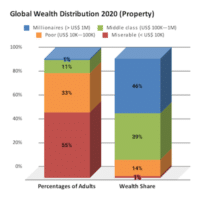
World Inequality Report: Class divide explains more than regional divisions
The report clearly shows how the class divide has become relatively more important than the regional divide in determining global inequality. This simply tells that in today’s world where one is born and brought up has relatively less impact than in which class the person belongs to in explaining relative earnings and wealth status.
-

What does it have to do with Black folks?
The worldview of liberals usually ends at the borders of the U.S. settler-state until they are mobilized by the oligarchy to provide ideological cover for the latest imperialist intrigue. This is as true for the liberal Black “misleadership” class as it is for Euro-American liberals.
-
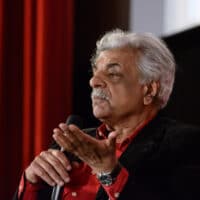
Tariq Ali: ‘Democracy is largely a set of rituals now’
“There is no socialist blueprint. If you think there is a socialist blueprint, then you will only be a utopian. The formation of economic policies has to be done with the collaboration of those on whose behalf you are going to change structures.”
-

Colombia 2021: The year in which State terrorism became visible
The State and the ruling classes of Colombia, which constitute the counterinsurgent power bloc, have made use of a series of fallacies to hide the terrorist nature of the State in this country, consolidated as such for decades.
-

Are there “foreigners” in the U.S. working class?
Politicians and the media work hard to give the impression that millions of low-wage workers are constantly seeking entry into the U.S. Most U.S. news consumers would probably be astonished to learn that the undocumented population here actually declined during the years from 2008 to 2016. It continued to decline at least until 2019.
-

Colonialism: a cancer on the planet
The acuity of Hunton’s insights, seen in retrospect so many decades later, offers astounding reading. Throughout, he has one clear aim: to let the peoples of the struggling masses in the emerging nations seize their own destiny.
-
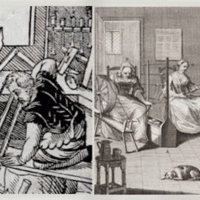
Dispossessed: Origins of the Working Class
Deprived of land and common rights, the English poor were forced into wage-labor. CAPITAL VERSUS COMMONS, 4
-

The right is surging in the U.S., but there’s cause for hope
Emma Norton speaks to Sherry Wolf and Joel Geier, two long-time revolutionary socialists in the United States, about the turmoil, contradictions and possibilities of the U.S. political situation.
-

Environment, human rights and class power
Environment is human right, said and resolved a recent UN meet. It’s a reiteration of an already discussed issue–essential to all of the human society.
-

Class warfare and socialist resistance: Nicaragua, Cuba, Venezuela as existential threats to the U.S.
Why do Nicaragua, Cuba and Venezuela pose such an existential threat to the U.S.? The promise of socialism and their resistance to U.S. class warfare.
-
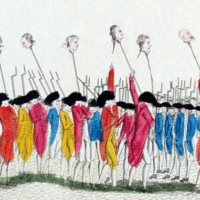
Class conflict and economics
A funny thing happened on the way to the recovery from the Pandemic Depression: class conflict is back at the core of economics.
-

Dossier No. 46: Big Tech and the current challenges facing the class struggle
We cannot give ourselves the luxury of being technophobic, of negating the importance of technologies and their potential in the struggle. At the same time, we cannot believe in the idea that technology in itself will result in advances for the organised working class.
-

The New Dangerous Class? The PMC and Virtue Hoarding
In a review of a new book about the ‘Professional Managerial Class’, James Foley says middle-class activists dress up conformity as a war on cultural backwardness.