
-

What Do Vice Presidents Do?
I was reflecting on the wisdom I acquired in one of my early college classes, “Introduction to American Government,” and subsequent historical readings. First, the conventional wisdom of American political life was that Vice Presidents are rarely of any administrative or political consequence. Generally, sitting Vice Presidents represent the United States at funerals of foreign […]
-

Gaddafi’s Ghost Haunts French Ex-President Sarkozy
The criminal case of ex-France President Nicolas Sarkozy touches the historical tensions between Muammar Gaddafi’s Libya and Western powers, particularly France. In a recent development, a Paris court sentenced Sarkozy to five years in prison for criminal conspiracy, marking a historic conviction for a former French president. The charges? They are allegations that the Libyan […]
-

Nikolai Gogol’s Department of Government Efficiency
Almost two centuries after its opening night, Gogol’s five-act satirical play The Government Inspector continues to create a stir with every performance, seemingly no matter where. Maybe because corruption and self-serving double-talk aren’t just familiar features of 19th-century Russia, but have become ingrained facets of all systems of government and officialdom, making them recognizable to […]
-

The Soviet Union and the Palestinian Liberation Struggle
On October 8, 2023, the Israeli war machine, armed and financed by Washington, launched the first genocide in history to be broadcast live before the eyes of the world. As we enter October 2025, the second year of this open genocide, neighborhoods in Gaza continue to be leveled, hospitals bombed, and children condemned to death […]
-
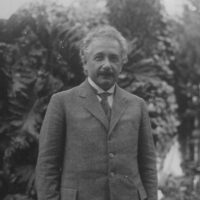
John Bellamy Foster on Einstein’s “Why Socialism?”
This interview was first posted by Bibliocracy Radio and broadcast on KPFK 90.7 FM in Los Angeles. Click here to listen. Thursday, Sept 11 at 2:30 PM on KPFK: My guest this week is the writer and Monthly Review editor John Bellamy Foster on his work in helping Monthly Review Press republish the classic Albert […]
-
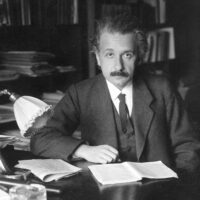
The Smartest Man Ever Was a Socialist: An Interview with John Bellamy Foster
WORT 89.9FM Madison · The Smartest Man Ever was a Socialist This interview and the following article were originally posted by A Public Affair on WORT 89.9 FM in Madison, Wisconsin. In the United States, Albert Einstein isn’t well known for his views on socialism. But in 1949, he wrote a salient essay for the […]
-

The French Impressionists: Caught between revolution and counter-revolution
Most of the Impressionist artists were from comfortable, if not wealthy, families. This relative privilege coloured their attitudes to contemporary events.
-
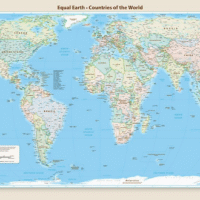
African Union urges adoption of world map showing continent’s true size
The African Union (AU) has backed a campaign to end the use by governments and international organisations of the 16th-century Mercator map of the world in favour of one that more accurately displays Africa‘s size. Created by cartographer Gerardus Mercator for navigation, the projection distorts continent sizes, enlarging areas near the poles like North America […]
-

The Experience of Nanjie Village and the Possibilities of Socialist Development in Contemporary China: Successes of the Collective Economy under Reform and Opening-Up
With the beginning of the reform and opening-up policy, the People’s Republic of China entered a new historical period in its development. Starting in 1978, the country began to prioritize a development model with characteristics quite distinct from those prevailing during the previous period (1949–78). From then on, China began to emphasize the growth of […]
-

Reviving Louise Bryant
Louise Bryant’s name is nearly forgotten in American history books, effaced by any number of historians for a wide variety of reasons.
-
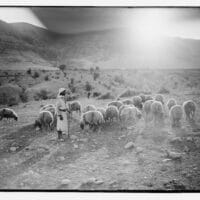
Palestine and the Commons: Or, Marx and the Musha’a
In 1958 the assistant headmaster did the Bible reading at the morning assembly of the Karachi Grammar School (Pakistan), founded in 1848 by the Church of England. The reading from Acts 17:23 concerned St. Paul’s declaration upon seeing the Athenian monument to an unknown God. “What you worship but do not know—this is what I […]
-

Ellen Meiksins Wood facts for kids
Ellen Meiksins Wood (April 12, 1942–January 14, 2016) was an important American-Canadian thinker and historian.
-

The Start of Indigenous Agriculture in North America and the American Genocide
A recent paper in Science addresses an intriguing question: Did North America have settled agriculture before the arrival of Europeans? Or were the people in what would come to be known as North America still in the hunter-gatherer stage—unlike Mesoamericans, who had advanced civilisations, such as the Mayans, Aztecs, and the Incas? The answer is […]
-

Paul Sweezy facts for kids
Paul Sweezy helped start and edit the well-known magazine Monthly Review. People remember him most for his ideas in economics. He was one of the top thinkers in Marxian economics in the second half of the 20th century.
-
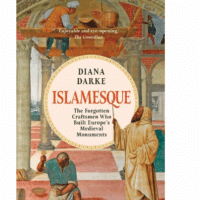
‘Islamesque: The Forgotten Craftsmen Who Built Europe’s Medieval Monuments’ – book review
Diana Darke’s brilliant history of medieval architecture reveals the extent of Islamic influence on the foundational phase of Western European art and buildings, finds Dominic Alexander.
-

Coalbrook: The Worst Mining Disaster in Africa
On the morning of January 21, 1960, 431 black and six white coal miners were entombed in a sudden collapse at Clydesdale Collieries near Coalbrook in Sasolburg, Free State Province.[1] The first rockfall took place at about 4:30 p.m. No one was killed or severely injured. While the rock still creaked and split, many of […]
-

From the Rockies to Stockholm: Ignoring the global crisis
A significant economic slowdown into stagnation, alongside still relatively high inflation; a crippling debt burden for the majority of the world’s population eking out a bare living; and an accelerating climate crisis—none of these issues will be discussed in the Rockies or in the Grand Hotel in Stockholm.
-
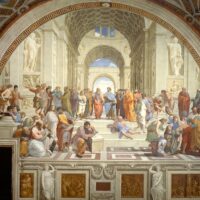
The Ancients: What can they teach us about our world and how to live in it?
Nature is an upper-case term here, defined as “a historically conditioned, polyvalent concept that, because it included humans, is necessarily an intrinsic concern to people living in both urban and rural environments.”
-

‘Christopher Hill: Life and Legacy of a Radical Historian’
Christopher Hill looms large in the landscape of British Marxist historiography, perhaps the indispensable historian of the English Revolution for generations on the Left.
-
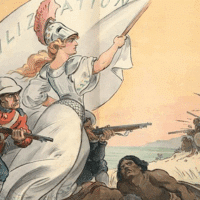
ESSAY: ‘The Intellectual Origins of Imperialism and Zionism’, Edward Said, 1977
The zionist terrorist entity does not act alone. Over the 600 days of the genocide of the Palestinians, the United States has shipped 800 planeloads, carrying more than 90,000 tons of missiles, bombs, and military equipment, to the zionist entity.